İlk kavgalarının neyle ilgili olduğunu anlayamadık. Kızım için bu minik daireyi kiralayalı henüz bir ay bile olmadı. Bir akşam dışardan dönüşümüzde dairelerinin açık kapısından içeriyi gördüm istemeden. Yarı çıplak oturuyorlardı küçük bir masada karşılıklı. Hava çok sıcaktı ve biraz essin diye kapıyı açık bırakmış olmalıydılar. Mutfakta duran ütü masası dikkatimi seçti. Daire o kadar küçük ki dış kapıdan şöyle bir bakış attığınızda evin tamamı görülebiliyor. Kırklı yaşlarında bir çift. Adamın yüzünü hiç görmedim ya kadınla aynı yaşlarda olduğunu varsayıyorum. Aynı gün, aynı zaman dilimi içinde ikinci karşılaşmamızda ise kadın özür dieyerek kapıyı kapattı. Saçları omuzlarında kızıl kumral bir kadın. Aynı günün gece yarısı, yan taraftan kadının giderek yükselen sesini duyduk. Kızgındı. Bir şeye kızgındı. Çok kızgındı. Bağırıp çağırıyordu. Hiç susmadan ve giderek daha çok sesini yükselterek bağırıyordu. Adamın sesi hiç çıkmıyordu ve onun sessizliği sanki kadının daha çok sinirlerini bozuyordu veya kendini daha da haklı görüp daha beter bağırıyordu. Saatlerce böyle bağırdı. Bir ara kapı açılma sesi duyduk. Dış kapı sesi. Adamın çıkıp gitmiş olabileceğini düşündük. Kadınının sesi apartman boşluğunda yankılanıyordu. “Dove vai! Dove vai! (Nereye gidiyorsun’ Nereye gidiyorsun!” haykırışları “Vai! Vai! (Git ! Git!) “ lere dönüştü. Bir ara adamın cılız sesini duyar gibi olduk. Birkaç saat sonra adam geri geldi. Bu aradaki sessizliği uyuyabilmek için kullandık. Adamı içeri aldı. Daha sessiz konuşmalar duyduk. Bağırmaları kesilmişti. Sabah ise, hiçbir şey olmamış gibi normal perdeden konuşmalar duyduk.
Setenay’la konuşmak, analiz etmek için malzeme bulmuştuk. Diyordu ki: “Insan o kadar bağırıp çağırdığı insanın yüzüne sonra nasıl bakabilir?” Biz bu kavgaya şöyle anlamlar, ihtimaller yükledik:
- Büyük olasılıkla, bu tür hareretli tartışmaların ardından sevişiyorlardı.
-Adamın hiç sesi çıkmadığına göre kadının nevrotik tavırlarından ya hoşlanıyordu ya da kadını seviyordu ve deliliğine tahammül ediyordu
-Kadını aldatıyordu ve suçluydu ve söyleyecek bir şeyi yoktu ve sessiz kalıyordu.
-Kadın isterikti ve adam bunu biliyordu ve bu krizin geçmesini bekliyordu sonunu bildiği için.
-Kadın belki de telefonda başka birine bağırıyordu (zayıf ihtimal)
-Kadının beyninde tümör filan vardı ve ağzından çıkanları kontrol edemiyordu.
Dün gece komşularımızdan gelen bağırışmalar, inlemeler, ulumalar bu kadar pervasızca, apartmanı ayağa kaldıracak kadar yüksek perdeden kavga eden bu çiftin sevişmelerinin de kavgalarından bir farkı olmadığını ortaya çıkardı. Önce kadının onulmaz bir hastalık nedeniyle çektiği acıdan bağırdığını sandım. Acıdan insanı kıvrandıran inleten son kertelerine ulaşmış, onulmaz bir hastalık. Bir süre sonra bu inlemelere adamın sesi de karışmaya başladı. İkisi birlikte uluyup inliyorlardı. Ve....... Crescendo!
Böylece ilk kavganın yapısı hakkında biraz fikir edinmiş oldum.
Sabah kahvaltı sırasında kızıma sordum: “ Dün gece yan taraftan gelen sesleri duydun mu?” Yüzümdeki muzır gülümsemeye bakıp duymadığını söyleyince sevindim. İlk kavganın yapısına ışık tutacak kadar bilgi verdim.
Kişisel olarak yorumum şudur: Ne önceki ne sonraki bağırış çağırışlarda bir müzikalite vardı. Kadının ses tonu her iki seansta da berbattı. Adamın sesini zaten pek duyamamıştık ancak ikinci seferde çıkardığı ses tonu berbattı.
Takip eden gecelerden birinde kadın yalvarırcasına konuşuyordu. Kızım kulak kabartmış bu kez : "beni yalnız bırakma" diyerek yalvarıyormuş.
Bir kaç gün sonra kira kontratımızın kopyasını almak için emlakçıya gittiğimizde evle ilgili her şeyin yolunda olup olmadığını sordu. Tutto bene? Biz de komşularımızı biraz anlatmaya çalıştık. Bu tür öyküler insanlarda bir heyecan yaratır ya, gözleri faltaşı gibi açıldı. En sonunda da "divertimento ha?" diyerek güldü. Evet, DIVERTIMENTO. En azından bu sözcük müzikal bir terim. Divertimento, vivace, vs.vs. Italyanlara ve onların yaşam biçimine en çok uyan sözcükler sanki. Ama en ateşlisi bile acıklı değil mi? Bir kadın neden sabaha karşı, gün ağarmadan "gitme, beni yalnız bırakma" diye sevgilisine yalvarır?
Bolonya'dayım. Gündüzlerimi kızım Setenay'la geçiriyorum. Akşam yemeğinden sonra bir heyacan sarıyor ikimizi de. Çünkü, her gece güzel bir film izliyoruz. Genellikle ödüllü filmleri seçiyoruz. Bu biraz kolaya kaçmak olsa da " hımmm bu film bu kadar ödülü niye almış bir bakalım" diye bir merak sarıyor içimizi. Dün gece"In a Better World" , bu gece " There Will be Blood". Her geceye bir film seçtik. Eminim kızım da ben de Bolonya'da birlikte geçirdiğimiz bu günleri hiç unutmayacağız. Birlikte yürümek, birlikte kahvaltı yapmak, alış veriş yapmak, sokaklarda kaybolmak, birlikte yorulmak, hayattan, şundan bundan söz etmek, film izlemek, sonra izlediğimiz filmin üzerine konuşmak....Tek derdim oğlumu, Oğuz'u özlemek. Biri orada biri burada ama yakında kavuşacağız. Film bittikten sonra biraz okuyorum. Elimin altındaki kitap: José Saramago'nun "The Notebook" adlı kitabı. Türkçe'ye çevirisi var mı bakmadım ancak varsa "Not Defteri" olarak çevrilmiş olmalı. Umbero Eco'nun önsözüyle başlıyor kitap. " An odd character, this Saramago ( tuhaf bir karakter bu Saramago)" diye yazmış önsözünde. Nobel ödülü aldıktan sonra 85 yaşında bir internet blogu açıp orada yazılar yazmasına şaşmış gibi . "The Notebook" zaten bu blogda yazdıklarını içeren kitap. "Blindness" adlı filmi izledikten sonra seri okumak üzere kitaplarını almaya başladım. En çok sevdiklerim arasında şimdi. J.M Coetzee 'nin yanına koydum. Nobelprize.org sitesinden aldığım otobiyografisini sayfamda İngilizce olarak paylaşıyorum. Saramago, 87 yaşında aramızdan ayrıldı. Blogunda yazılar paylaşamıyor artık. Ancak, bıraktığı miras bizlere, çocuklarımıza, torunlarımıza fazla fazla yetecek. Biz aktaracağız. Onu bu kadar çok sevmemin ardında biyografilerimizdeki ortak noktalar mı acaba? Köy kökenlilik, kimliğe yanlış işlenmiş doğum günü ve ad , teknik eğitim vs. vs. Diyor ki, "Ben yalnızca yazmıyorum. Ben neysem onu yazıyorum. Eğer ortada bir sır varsa belki budur" . Başka önemli bir yazar da "ben kendimin öyküsüyüm" diyordu. Ben de diyorum ki, ben kendimi söylüyorum ve kendimin öyküsüyüm ve ben "guru"larımı çok seviyorum. Onlar olmasa güçsüz kalırdım. Kolsuz kanatsız kalırdım. Onlar bana güç veriyor, kendimi onaylamama yarıyor. Her daim, algılarımızı bozan bu dünyada aslında neyin gerçekte önemli, değerli ve anlamlı olduğunu hatırlatmak üzere ihtiyaç duyduğum sarsma etkisini yaratıyor. Tuhaf belki, kendime müzik yolculuğumda hiç bir müzisyeni model almadım ama izlediğim edebiyaçıları, filozofları, şairleri sayabilirim. Onlar bana kendim olmayı öğrettiler.
" I think we are blind. Blind people who can see, but do not see / Sanıyorum bizler körüz. Görebilen ancak görmeyen körler "
José Saramago
Autobiography
Written over the author's signature and translated into English by Fernando Rodrigues and Tim Crosfield
I was born in a family of landless peasants, in Azinhaga, a small village in the province of Ribatejo, on the right bank of the Almonda River, around a hundred kilometres north-east of Lisbon. My parents were José de Sousa and Maria da Piedade. José de Sousa would have been my own name had not the Registrar, on his own inititiave added the nickname by which my father's family was known in the village: Saramago. I should add that saramago is a wild herbaceous plant, whose leaves in those times served at need as nourishment for the poor. Not until the age of seven, when I had to present an identification document at primary school, was it realised that my full name was José de Sousa Saramago...
This was not, however, the only identity problem to which I was fated at birth. Though I had come into the world on 16 November 1922, my official documents show that I was born two days later, on the 18th. It was thanks to this petty fraud that my family escaped from paying the fine for not having registered my birth at the proper legal time.
Maybe because he had served in World War I, in France as an artillery soldier, and had known other surroundings from those of the village, my father decided in 1924 to leave farm work and move with his family to Lisbon, where he started as a policeman, for which job were required no more "literary qualifications" (a common expression then...) than reading, writing and arithmetic.
A few months after settling in the capital my brother Francisco two years older, died. Though our living conditions had improved a little after moving, we were never going to be well off.
I was already 13 or 14 when we moved, at last, to our own - but very tiny - house: till then we had lived in parts of houses, with other families. During all this time, and until I came of age I spent many, and very often quite long, periods in the village with my mother's parents Jerónimo Meirinho and Josefa Caixinha.
I was a good pupil at primary school: in the second class I was writing with no spelling mistakes and the third and fourth classes were done in a single year. Then I was moved up to the grammar school where I stayed two years, with excellent marks in the first year, not so good in the second, but was well liked by classmates and teachers, even being elected (I was then 12...) treasurer of the Students' Union... Meanwhile my parents reached the conclusion that, in the absence of resources, they could not go on keeping me in the grammar school. The only alternative was to go to a technical school. And so it was: for five years I learned to be a mechanic. But surprisingly the syllabus at that time, though obviously technically oriented, included, besides French, a literature subject. As I had no books at home (my own books, bought by myself, however with money borrowed from a friend, I would only have when I was 19) the Portuguese language textbooks, with their "anthological" character, were what opened to me the doors of literary fruition: even today I can recite poetry learnt in that distant era. After finishing the course, I worked for two years as a mechanic at a car repair shop. By that time I had already started to frequent, in its evening opening hours, a public library in Lisbon. And it was there, with no help or guidance except curiosity and the will to learn, that my taste for reading developed and was refined.
When I got married in 1944, I had already changed jobs. I was now working in the Social Welfare Service as an administrative civil servant. My wife, Ilda Reis, then a typist with the Railway Company, was to become, many years later, one of the most important Portuguese engravers. She died in 1998. In 1947, the year of the birth of my only child, Violante, I published my first book, a novel I myself entitled The Widow, but which for editorial reasons appeared as The Land of Sin. I wrote another novel, The Skylight, still unpublished, and started another one, but did not get past the first few pages: its title was to be Honey and Gall, or maybe Louis, son of Tadeus... The matter was settled when I abandoned the project: it was becoming quite clear to me that I had nothing worthwhile to say. For 19 years, till 1966, when I got to publish Possible Poems, I was absent from the Portuguese literary scene, where few people can have noticed my absence.
For political reasons I became unemployed in 1949, but thanks to the goodwill of a former teacher at the technical school, I managed to find work at the metal company where he was a manager.
At the end of the 1950s I started working at a publishing company, Estúdios Cor, as production manager, so returning, but not as an author, to the world of letters I had left some years before. This new activity allowed me acquaintance and friendship with some of the most important Portuguese writers of the time. In 1955, to improve the family budget, but also because I enjoyed it, I started to spend part of my free time in translation, an activity that would continue till 1981: Colette, Pär Lagerkvist, Jean Cassou, Maupassant, André Bonnard, Tolstoi, Baudelaire, Étienne Balibar, Nikos Poulantzas, Henri Focillon, Jacques Roumain, Hegel, Raymond Bayer were some of the authors I translated. Between May 1967 and November 1968, I had another parallel occupation as a literary critic. Meanwhile, in 1966, I had published Possible Poems, a poetry book that marked my return to literature. After that, in 1970, another book of poems, Probably Joy and shortly after, in 1971 and 1973 respectively, under the titles From this World and the Other and The Traveller's Baggage, two collections of newspaper articles which the critics consider essential to the full understanding of my later work. After my divorce in 1970, I initiated a relationship, which would last till 1986, with the Portuguese writer Isabel da Nóbrega.
After leaving the publisher at the end of 1971, I worked for the following two years at the evening newspaper Diário de Lisboa, as manager of a cultural supplement and as an editor.
Published in 1974 with the title The Opinions the DL Had, those texts represent a very precise "reading" of the last time of the dictatorship, which was to be toppled that April. In April 1975, I became deputy director of the morning paper Diário de Nóticias, a post I filled till that November and from which I was sacked in the aftermath of the changes provoked by the politico-military coup of the 25th November which blocked the revolutionary process. Two books mark this era: The Year of 1993, a long poem published in 1975, which some critics consider a herald of the works that two years later would start to appear with Manual of Painting and Calligraphy, a novel, and, under the title of Notes, the political articles I had published in the newspaper of which I had been a director.
Unemployed again and bearing in mind the political situation we were undergoing, without the faintest possibility of finding a job, I decided to devote myself to literature: it was about time to find out what I was worth as a writer. At the beginning of 1976, I settled for some weeks in Lavre, a country village in Alentejo Province. It was that period of study, observation and note-taking that led, in 1980, to the novel Risen from the Ground, where the way of narrating which characterises my novels was born. Meanwhile, in 1978 I had published a collection of short stories, Quasi Object; in 1979 the play The Night, and after that, a few months before Risen from the Ground, a new play, What shall I do with this Book? With the exception of another play, entitled The Second Life of Francis of Assisi, published in 1987, the 1980s were entirely dedicated to the Novel: Baltazar and Blimunda, 1982, The Year of the Death of Ricardo Reis, 1984, The Stone Raft, 1986, The History of the Siege of Lisbon, 1989. In 1986, I met the Spanish journalist Pilar del Río. We got married in 1988.
In consequence of the Portuguese government censorship of The Gospel According to Jesus Christ (1991), vetoing its presentation for the European Literary Prize under the pretext that the book was offensive to Catholics, my wife and I transferred our residence to the island of Lanzarote in the Canaries. At the beginning of that year I published the play In Nomine Dei, which had been written in Lisbon, from which the libretto for the opera Divara would be taken, with music by the Italian composer Azio Corghi and staged for the first time in Münster, Germany in 1993. This was not the first cooperation with Corghi: his also is the music to the opera Blimunda, from my novel Baltazar and Blimunda, staged in Milan, Italy in 1990. In 1993, I started writing a diary, Cadernos de Lanzarote (Lanzarote Diaries), with five volumes so far. In 1995, I published the novel Blindness and in 1997 All the Names. In 1995, I was awarded the Camões Prize and in 1998 the Nobel Prize for Literature.
From Les Prix Nobel. The Nobel Prizes 1998, Editor Tore Frängsmyr, [Nobel Foundation], Stockholm, 1999
This autobiography/biography was written at the time of the award and later published in the book series Les Prix Nobel/Nobel Lectures. The information is sometimes updated with an addendum submitted by the Laureate.
Beati quorum tecta sunt peccata Blessed are they whose sins are covered over!" Günahları örtülmüş olanlar kutsanmıştır. Dante
Sızma yağ gezdirilmiş ızgara sebze, parmesan, mozarella, kırmızı şarap ve dondurma; tarih, tarihi eserler, taş, taş duvarlar " se avete uncervello,usarei piedi / aklı olan ayaklarını kullanır" misali ayaklarımın altından kayan yollar, tren yolculukları, pazarlar, içlerinde saatlerce kendimi kaybedebileceğim kitapçılar, kahve kokusu, kahve...
Seviyorum işte bu memleketi ve insanlarını. Bolonya tren istasyonunda kızımla tren bekliyoruz. Bekleme salonunda, Ağustos 1980 tarihinde yaşanan terör nedeniyle yaşamlarını kaybetmiş ve çoğu genç olan insanlar anısına hazırlanmış mermer duvardaki isimleri okudukça yüreğim cız ediyor, kızım isimleri okuyor, benim içim cız ediyor, yakınlarımı kaybetmişim gibi. Soydaları aynı olan, aile oldukları anlaşılan üç kişinin genç anne-baba ve çocukları olduğunu anlıyoruz.
Ekmeğimi bu ülke ile yaptığım işten kazanıyorum ve bana sunduğu imkanlar , hayatıma kattığı onca renk anlatmakla bitmez.
Bir de şu dili akıcı konuştum mu tamamdır işim. O zaman bana sorabilirsiniz: "Siz İtalyanlaştırdıklarımızdan mısınız yoksa İtalyanlaştıramadıklarımızdan mısınız?"
Güzel olan, mobil olabilmek, hareket özgürlüğüne sahip olabilmek. Elbette ilk stajını Ürdün'de, Filistin'li kılavuzlar eşliğinde yapmış ve her gittiği yerde mutlaka bir güzellik ve giz bulan bir insan olarak biliyorum ki her ülkenin hem güzellikleri hem de çirkinlikleri var ancak ben bu ülkenin hep güzelliklerini yaşadım. Hep öyle denk düştü diyelim ama kendime sormadan edemiyorum. Madem ki ben burada hep güzeli yaşıyorum, buluyorum, kendimi alabildiğine özgür, umut ve enerji dolu hissediyorum ve bunları hep bu ülkede buluyorum, bunda bir hikmet yok mu?
Ve diyorum ki, her şey kötü, çok kötü gitse ne olabilir? Şu güzelim meydanlardan birinde, bir köşede, alır gitarımı elime şarkılar söylerim. Şapkamın boş kalmayacağından eminim.
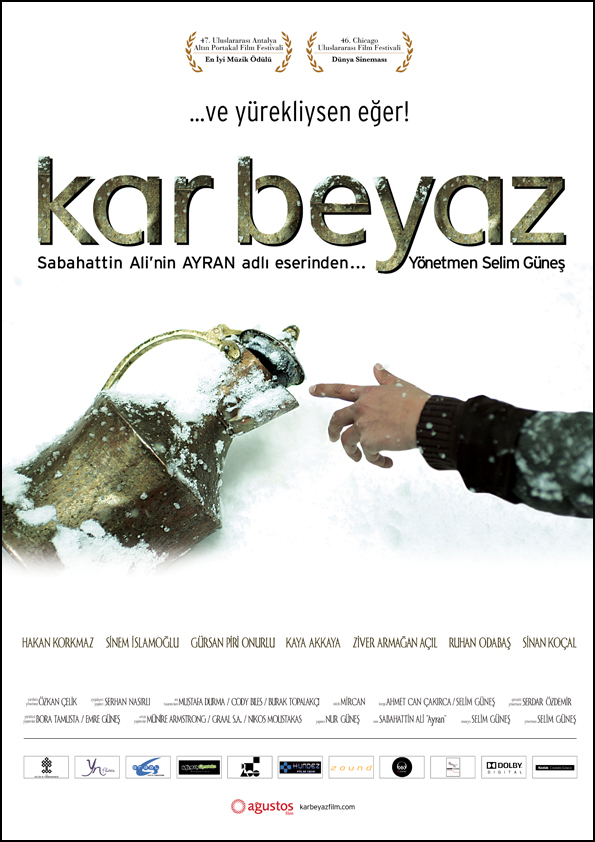
Yönetmen Selim Güneş’in ilk filmi Kar Beyaz bir ilk film olmasına rağmen ödüller alarak sinema tarihinde kendine bir yer açmayı başardı.
47ci Antalya Altın Portakal Film Festivali’nde ulusal uzun metrajlı filmler arasında en iyi film müziği ödülünü aldıktan hemen sonra Chicago Film Festivali’nde dünya sineması kategorisinde, Amerika’lı izleyicilerin yüreklerini ısıttı ve övgüler alarak döndü.
Geçtiğimiz günlerde, 15ci Sofya Film Festivali’nde jüri özel ödülüne layık görüldü.
Ankara ve İstanbul film festivallerinde ise yarışmalı böümlerde gösterilecek.
Önümüzdeki günlerde hem Ankara Film Festivali hem de İstanbul Film Festivali’nde gösterilecek olması ve 13 Mayıs 2011 tarihinde vizyona girecek olması nedeniyle,
“zamanıdır “ diye düşündüm. Altın Portakal’da en iyi film müziği ödülünün ardından, birlikte çalıştığım *viyolonselcinin bir **köşe yazarı üzerinden başlattığı iddialarla gölge düşürdüğü Kar Beyaz filminin müziğinin öyküsünü anlatmanın zamanıdır.
Evrensel Gazetesi ve Yeni Harman gazeteleri dışındaki ana gazetelerin sessiz kaldığı, nedense yorum yapmak istemediği konu ile ilgili internet ortamındaki sosyal paylaşım ortamlarında çok tartışma yapıldı ama ben şimdi, müziğin öyküsünü bir kez daha yazmak ve paylaşmak istiyorum.
2008, kış aylarından biri. Padova’daki dairemde, oturduğum çalışma masamdan dışarıyı görüyorum. Kar yağıyor. Tarihi eserlerin yapısal analizleri konulu ileri master çalışması için burslu geldiğim üniveristede dersler ve ödevler çok ağır. Hemen her gün, gece yarısından sonra ikiye üçe kadar çalışmam gerekiyor. Hem üzerimde, seçilmiş ve bursa layık görülmüş mühendis olmanın sorumluluğu var hem de bir taraftan İngiltere’den online yürüttüğüm müzik eğitiminin terminleri kesin olan ağır ödevleri ve düzenli olarak yürütülmesi gereken çalışmaları var. Padova Üniversitesi İnşaat fakültesindeki sınıf arkadaşlarıma, bu ağır programa rağmen şanslı olduklarını söylüyorum. Hepsi benim bir de müzik ödevleriyle boğuştuğumu, iki eğitimi eş zamanlı yürütmem gerektiğini biliyorlar. Bunlara rağmen, en azından İstanbul’daki hayatımın sorumluluklarını bir süreliğine devretmiş olduğum için, ve buradaki mutlak yalnızlığım bana zamanımı azami ölçüde etkili kullanabilme olanağı sağladığı ve gitarımı da yanımda getirmiş olduğum için küçük boşluklar yaratıp bu boşlukları Tao egzersizleri, nehir boyunca ve tarihi sokaklarda yürüyüşler ve gitarımla bir şeyler tıngırdatıp yeni şarkılar yapmak, kitap okumak gibi benim için olmazsa olmaz şeylerle dolduruyorum. İşte, bu dönemde, Kar Beyaz filminin yönetmeni Selim Güneş’ten bir e-mail alıyorum.
“Bu Mircan o Mircan mı?”
Selim Güneş’in bu yazısı beni taa onüç yaşıma götürüyor. Nedeninin bilmiyoruma ama Annem ve babam beni onbeş günlüğüne Güneş ailesinin Maçka’daki evlerine bırakmışlar. Orada kalmam gerekiyor. Ağebeyimi yeni kaybetmişim. Kabuslarla dolu bir dönem. Cıvıl cıvıl bir aile Güneş ailesi. Kalabalık. Bir sürü çocuk var. Sıcak, sevecen bir anne ve baba. Bu sıcaklığı bana da geçiriyorlar. Çocukların yanı sıra, eve gelip giden yeğenler de var. Bu yeğenlerden biri Selim Güneş.
“Bu Mircan o Mircan”
İşte böyle başlıyor Kar Beyaz’ın müzik serüveni. Selim Güneş bütün albümlerimi almış dinlemiş ve çekmeyi planladığı ilk filminde OUTIM albümünden Mircanishi Nanni (Mircan’ın Ninnisi) ni mutlaka kullanmak istediğini, Kül albümümden de Evlerinin Önü Yoldur ve Fincanın Etrafı türkülerini istediğini, filmin müziğinde benimle çalışmak istediğini vs.vs söylüyor. Senaryoyu gönderiyor. O’na yaptığım müziğin soundunun maliyetinin yüksek olduğunu en baştan söylüyorum. Yeni baştan böyle bir müzik çıkarmamı istiyorsa bunun pahalıya mal olacağını ancak mevcut parçalarımı kullanırsak, maliyetin düşeceğini vs. vs gibi işin bütün teknik ve mali yönlerini yazışarak görüşüyoruz.
“Şavşat”
2009 Ağustos ayı. TRT bir belgesel çekiyor. On iki müzisyen belirlenmiş. Biri de benim. Bu yüzden Doğu Karadeniz’de, doğduğum köye de geliyorlar. Selim Güneş’te , filmin çekileceği yerleri tebit etmek için gelmiş. Çekimler bittikten sonra Selim Güneş, birkaç kişiyle köydeki dağ evime geliyor. Filmden bahsediyoruz. Ertesi gün, çocukluğumun Güneş ailesi ile bir minibüse doluşarak Şavşat’a yer görmeye gidiyoruz. Hem çekimlere, hem müzik projelerimin çoğuna tanıklık etmiş ve OUTIM albümüme haikularıyla katkıda bulunmuş olan yazar Pelin Özer de yanımızda. Bu arada, dağdaki evimde, Amerika’dan gelmiş olan yeğenim Aydın Can Kutluay , gelirken yanında getirdiği protools kayıt cihazı ile Kar Beyaz’ın parçalarından birini kaydediyor. Doğaçtan söylediğim bu parçada şair Gülten Akın’ın “İlahiler” adlı kitabından “Bunalan Ozan İlahisi” adlı şiirini kullanıyorum.
“İstanbul”
Bir yandan Elixir albümümün kayıtları devam ediyor. Mühendislik projeleri devam ediyor.
İngiltere’ye müzik eğitimimin final sınavı için gidiyorum.
“Guilford- Wutton House”
Londra’dan önce otobüs, sonra tren, sonra taksi ile eski bir malikaneye geliyorum. Olağanüstü sakin ve dingin bir yer. Sınava gireceğim. Nota kitaplarım, ders notlarım, her şey yol arkdaşım- kahverengi deri el bavulumda. Stresliyim. Çok şey var çalışmam gereken. Biraz bahçede, İngiliz bahçeye bakarak, biraz içerde, ama her fırsatta çelışıyorum. Defterler dolusu yazmışım. Eksik olduğum, tamamlayamadığım konular var. ( 5-3 chord built from triad, root position, 6-4-3 chord built from triad with 7th , second inversion). Defterime yazmışım. Çalışma programı: Sabah- Score reduction; öğleden sonra- Style studies, Purcel& Dido and Aenas, key sechemes; Akşam & gece: Baroque-Romantic-Classic periods.
Defterimden bir çalışma sayfası: Mozart Divertimento K563, first movement 9-17, reduction from three to two.
Guilford’da hava soğuk. Deri pardesümün yakasını iyice kaldırmış yürüyorum. Sokakları keşfediyorum. Şirin bir aralığa giriyorum. Sıcak bir kabak çorbası içip Guilford kilisesinin yolunu tutuyorum. Kilise soğuk. Çok soğuk. Ellerimizi oğuşturuyoruz. Kimlikler, pasaportlar soruluyor. Sıralarımızın üzerine koyuyoruz. Sınav için açıklamalar yapılıyor. Sonra sınav.
Sorular, sorular.... Cevaplayamadıklarım var. Veya yanlış cevapladığımdan emin olduklarım var. Schubert analizini doğaçlama yapıyorum. Doğru düzgün o kısmı çalışamamıştım.
Sonuç: Geçer not ama ben daha iyi yapamadığım için kendimden utanıyorum.
Yatılı okula da gidemediğim için diploma alamayacağım. Yeniden alırım diyorum. Müzik çalışmaya bayılıyorum.
“İstanbul”
Kar Beyaz’ın ilk çekimleri, taslak kurgusu geliyor. Selim Güneş ve eşi Nur Güneş ile defalarca çekimleri izliyoruz. Kurgu üzerinde fikir alış verişi yapıyoruz. Yavaş yavaş, her kurgudan sonra, müzikleri yerleştiriyorum. Bu çalışmaları Ağusto Film’in Koşuyolu’ndaki binasında yapıyorum.
İzledikçe, sahneleri bağlayacak ek müzğe ihtiyaç olduğunu düşünüyorum ve kendi müziğimin hüznüne en çok yakıştırdığım çello ile müzik düşünüyorum. Ah keşke Roger Sydney’e taşınmasaydı. Kalkar giderdim Bristol’e. Güzel güzel kaydederdik. Sala albümümde de birlkte çalıştığım Uğur Işık’ı arıyorum. Filmden bahsediyorum. “Güzel bir proje” diyorum.
Film yönetmenleri benim müziğimi çok seviyorlar ama ben özellikle film müziği yapmıyorum. Ara müzikleri birlikte yapalım diye öneriyorum. "Sen olduğun için kabul ederim", diyor. Taslak kurguyu Uğur Işık ve eşi ile izliyoruz. Film hakkında içimi karartan şeyler söylüyor. Ana akım filmlerden hoşlandığını anlıyorum. Müzik bütçesini çok az buluyor. İsminin yazılmasını istiyor. Elbette, diyorum. Bunun önemi yok. Önemli olan bu filme uygun en iyi müziği yapmamız diyorum. Müzik bütçesini artırmamı sistiyor. Yapımcıya bunu sormam gerektiğini söylüyorum. Yüzümü kızartıp, ek bütçe talebinde bulunuyorum. Kabul ediliyor. Zaman dar. Bu arada Uğur bana kaydedip te kullanmadığı kayıtlarını dinletiyor. Bu kayıtları beğeniyorum. Yeni baştan çalmana gerek yok diyerek tek tek kayıtları dinleyip seçiyorum. Tek tek her birinin filmin hangi sahnesine uygun düştüğünü saniye saniye kaydediyorum. Her saniyeyi not ediyorum. Eşi Çiğdem de yardım ediyor.
Kanal kayıtlarını kaba miksajını yapıp bana e-mail ortamında gönderiyorlar. Kayıtları nihai miksaj için Sydney’e Roger Mills’e gönderiyorum. Bu arada, yama işi gibi algılanmaması ve sound bütünlüğü sağlayabailmek için, film için yaptığım iki bestemin üzerine çello çalmasını istiyorum. Karşı Korku ilahisi ve Bunalan Ozan İlahisi’nin kayıtlarını veriyorum. Üzerine çello çalıyor. Bunları da Sydney’e Roger Mills’e gönderiyorum. Roger da üzerinde trompet çalıyor. Miksini yapıp gönderiyor. Uğur Işık, filmin ana parçası olan ve OUTIM albümüm için Bristol’de kaydettiğim Mircanishi Nanni üzerinde de çello çalıyor. Kar Beyaz filmi müziğinin mastering çalışmalarını yapan Osman Kent, Mircanishi Nanni- Mircan’ın Ninnisi adlı parçanın bu yeni versiyonunu hiç beğenmiyor. Parçayı berbat etmiş. Kesinlikle bu halini kullanmamalısın, diyor. Ayıp olmasın diye, parçanın bu halini de kısacık, çocuğun zagoru dereye düşürdüğü sahnede kullanıyorum.
Uğur Işık kanal kayıtlarını verdikten sonra, filmin müziği ile ilgili hiçbir katkıda bulunmuyor zaten bulunması da gerekmiyor çünkü bu kayıtları kullanmaya karar veren, nerede nasıl kullanılacağını belirleyen kişiyim. Günlerce Ağustos Filmin binasında, filmin kurgusu her değiştiğinde, müziğin kurgusunu değiştiriyoruz. Yedi tane bestemi kullanıyorum. Bir de score müzikler var. Filmin bitmiş halini, kurgu çalışmalarında hiç bulunmadığı ve bulunmak istemediği için bilmeyen Uğur Işık jenerikte adının yazıldığını da bilmiyor. Ödül töreninden önce karısına telefon açtırarak üzerimde baskı kuruyorlar. "Televizyonda gördük. Kar Beyaz yarışmalı bölümdeymiş. Peki öyleyse, müziği de mi yarışacak. Hay allah! keşke biz de orada olsaydık". Bu vakte kadar müthiş bir kibirle son derece ilgisizi kalan, filmin başarılı olacağına zerre kadar inanmayan Işık çifti şimdi nedense ilgi gösteriyorlar. Çalışma süresince beni en çok onlarda soğutan bu kibirleri olmuştu. Bu, sebebi belirsiz kibir ve ego.
Filmin jeneriğinde herkesin adı, verdiği hizmet kadar zikrediliyor. Elbette, filmin müzik yapımcısı, müzik direktörü ve finansörü olarak adım tepede yazıyor.
Öykünün devamını bilenler biliyor. Bilmeyenler için bir kez daha hatırlatıyorum: Uğur Işık, Murat Bardakçı üzerinden olay yaratıyor. Besteleri ben yaptım, diyor. Bestelerim çalındı, diyor. Benimle ilgili, nota bile bilmez, beste yapamaz deniyor. Onun sesini efekt olarak kullandım diyecek kadar ileri gidip, Roger Mills ve Osman Kent’in destekleriyle birlikte yarattığım albümlerimdeki bestelerime talip oluyor ve Kar Beyaz’ın beyazlığına gölge düşürüyor.
Ben şimdi, şuna yanıyorum. Ödül töreninde asıl teşekkür etmem gereken insanları, üzerimde kurulan baskı nedeniyle atladım. Asıl Osman Kent’e teşekkür etmem gerekiyordu. Asıl Roger Mills’e teşekkür etmem gerekiyordu. Bir taraftan kuruş kuruş, benden alacakları paranın hesabını sorup, bununla da yetinmeyip, taşın altına kar hesabı yapmadan elini sokan benim gibi insanları karalamaya çalışanlar teşekkürü haketmiyorlar. Teşekkür etmek te, etmemek te benim tasarrufumdadır ve bu yüzden, ödül töreninde , bir güzelliği paylaşmayı bilecek kadar olgun olduğunu sandığım ve yanıldığım Uğur Işık’a teşekkürümü geri alıyorum. Teşekkür etmiyorum ve diyorum ki: Yazıklar olsun!
Kar Beyaz filmini seviyorum. Kar Beyaz’ın ve damarlarımdan akan müziğimin üzerine gölge düşürmeyin!!
THE MUSICAL STORY OF THE MOVIE "WHITE AS SNOW"
In spite of the fact that "White as Snow” is the first film by director Selim Güneş, the movie has succeeded in earning a place in cinema history with the awards it has received.
Immediately after receiving the award for best film score among national feature-length films at the 47th Antalya Golden Orange Film Festival, it warmed the hearts of American viewers and was much praised at the Chicago Film Festival in the world cinema category.
More recently, it received the jury's special award at the 15th Sophia Film Festival.
It will be shown in the competitive section of the Ankara and Istanbul film festivals.
The fact that it will soon be shown at the Ankara Film Festival and the Istanbul Film Festival and that it will open in theatres on May 13, 2011 made me think, “It is time.” It is time to tell the story of the soundtrack for the movie “White as Snow”, which had a shadow cast over it by allegations started by the violoncellist* with whom I worked and taken public by a columnist after it received the best film score award at the Golden Orange Festival.
Except for Evrensel Gazette and Yeni Harman, the major newspapers remained silent about the issue and for some reason chose not want to comment, but it was hotly debated on social networking sites via the internet. However, I want to write the story of the music and share it one more time.
It was back in the winter of 2008. I could see outside from the desk where I sat in my flat in Padova. It was snowing. The classes and homework were very difficult at this university where I had a scholarship for advanced master’s study on the structural analysis of historical buildings. I had to work until two or three in the morning almost every day. Not only was the responsibility that came with being an engineer who had been deemed worthy of the scholarship weighing heavy on me, but I also had difficult assignments that had to be completed regularly for the online music education I was taking from England and the deadlines very strict. I told my classmates in the Construction department at Padova University that they were very fortunate in spite of the challenging schedule. They all knew that I had to complete two course of study at the same time and that I had to devote time to homework in music as well. In spite of all this, I had the opportunity to make the most of the absolute loneliness I felt there because I had at least turned over responsibility for my life in Istanbul to others. I had brought my guitar with me and so I managed to snatch a few minutes here and there. I filled them by doing things that I consider essential, such as Tao exercises, taking walks down the river and the historic streets, reading books or strumming something on the guitar and writing new songs. It was during this time that I received the e-mail from Selim Güneş, the director of the film “White as Snow”.
“Is this the same Mircan?”
This letter from Selim Güneş took me all the way back to when I was thirteen. I don’t know the reason, but my mom and dad left me with the Güneş family in Maçka district in Istanbul for fifteen days. I had to stay there. I had just lost my older brother. It was a time of my life filled with nightmares, but the Güneş family was a lively and energetic. It was crowded too. There were lots of children. Their mom and dad were warm and loving. They embraced me with the same warmth. In addition to the kids, there were nieces and nephews visiting the house too. One of these nephews was Selim Güneş.
“It is the same Mircan”
This is how the “White as Snow” musical adventure began. Selim Güneş had purchased all of my albums and listened to them. He told me that he definitely wanted to use Mircanishi Nanni (Mircan’s Lullaby) from the OUTIM album on the first film that he was planning on shooting and that he also wanted the folks songs entitled The Front of Their House is a Road and Around the Cup from the album “Ashes”, and that he wanted to work with me on a soundtrack for a movie. He sent the scenario. From the very beginning, I told him that the sound of the music that I did had a hefty price tag. From the start, I also told him that if he wanted me to do this kind of music, it was going to be expensive, but that if we used my existing pieces, it would be more affordable, etc. etc. We discussed all of the technical and financial aspects of the job through correspondence.
“Şavşat”
It was August 2009. TRT was shooting a documentary. Twelve musicians were selected and I was one of them. Therefore, they came to the village where I was born in the eastern Black Sea. Selim Güneş came as well to determine where his film would be shot. After the shooting was finished, Selim Güneş and a couple of his friends came to my cottage in the village. We talked about the film, and the next day, we all jammed into a minibus with the Güneş family from my childhood and went to see a place in Şavşat. Pelin Özer, the writer who is a witness to both the shooting and my music projects and even contributed to my OUTIM album with her haiku pieces, was with us. Meanwhile, my nephew visiting from America, Aydın Can Kutluay, was in my cottage and he recorded one of the pieces for "White as Snow" with the Protools recording device he brought with him. I sang this piece as an improvisation using the poem entitled “Hymn of a Suffocated Poet" from Gülten Akın's book “Ilahiler/Hymns”.
“Istanbul”
At this time, recording for my album “Elixir” was continuing as were my engineering projects.
I was also travelling to England for the final exam in my musical education.
“Guilford-Wutton House”
A bus before London, then a train and finally a taxi drops me off at an old mansion. It is an incredibly peaceful and serene place. But, I am here to take an exam. My music books, class notes, everything is in my travelling companion – my brown leather carry on. I am very stressed out. There is a lot that I have to study. Sometimes I studied in the garden, gazing out on the English garden; sometimes it was inside, but at every opportunity I was studying. I had filled up entire notebooks. There were some subjects that I had not completed and in which I was inadequate. (5-3 chord built from triad, root position, 6-4-3 chord built from triad with 7th, second inversion). I had written it in my notebook. My study program: Morning – Score reduction; afternoon – Style studies, Purcel&Dido and Aenas, key schemes; evening&night – Baroque-Romantic-Classic periods.
A study page from my notebook: Mozart Divertimento K563, first movement 9-17, reduction from three to two.
It was cold in Guilford. I walked with the collar on my leather coat pulled as high as it would go. I explored the streets. I entered a charming little side street. I had a bowl of hot soup and headed for the Guilford church. The church was cold. Very cold. We were rubbing our hands together. They asked for identification and passports. We placed them on our desks. Explanations were given about the exam. Then, the exam began.
Questions, questions… I was unable to answer some of them and there were some that I was sure I had answered wrong. I improvised the Schubert analysis. I was unable to play that part quite right.
The result: I received a passing grade but I was ashamed of myself for not doing better.
I could not obtain a diploma because I was unable to attend boarding school. I told myself I would do it later. I love studying music.
“Istanbul”
The first shooting from “White as Snow” and a draft scenario arrives. We watch the shooting dozens of times with Selim Güneş and his wife Nur Güneş. We exchange ideas regarding the scenario. Slowly, I begin to put the music in place after each scenario. I did all this work in the Ağustos Film building in Koşuyolu.
The more I watch it the more I feel like additional music is needed to connect the scenes and I think of music with the cello, which is the instrument that best suits the melancholy tone of my own music. If only Roger hadn’t moved to Sydney, I would go to see him in Bristol. We would have recorded something beautiful. I call Uğur Işık, a man I worked with on the “Sala” album. I tell him about the movie. I say, “It is a beautiful project.
Film directors love my music, but I don’t specialize in film music. I suggest that we do the interlude music together.” He says, “I’ll accept just because it’s you.” We watch a rough draft of the scenario with Uğur Işık and his wife. He says some things about the film which disturb me. I realize that he likes mainstream films. He says the music budget is too low and wants his name written in the credits. “Of course,” I reply. “That is not important. The important thing is for us to make the music that is best for this film.” He asks me to raise the music budget. I tell him that I have to ask the producer about that. I blush with embarrassment as I request an increase to the budget. My request is granted. There is not a lot of time. Meanwhile, Uğur has me listen to recordings he did previously but hasn’t used. I like the recordings. I told him that he didn’t have to play them again and I listen to each of them and choose appropriate pieces. I record second by second which one is best for which scene in the film. I make a note of every single second. His wife Çiğdem helps me as well.
They do a rough mix and send them to me via e-mail. I send the recordings to Roger Mills in Sydney for the final mix. Meanwhile, I ask him to play the cello on two of the compositions I did for the film to give it an integrated sound that doesn't seem like patchwork. I provide the recordings for “Hymn to Fight Fear” and “Hymn of a Suffocated Poet.” He plays the cello on top of these. I send these to Roger Mills in Sydney as well. Roger also plays the trumpet over them. He does the mix and sends it to me. Uğur Işık plays the cello over the main piece for the film which is Mircanishi Nanni, which I recorded in Bristol for my album OUTIM. Osman Kent does the mastering of the film score for “White as Snow”, but he does not like the new version of Mircanishi Nanni (Mircan’s Lullaby). He says, “He ruined the piece. You definitely can’t use this version.” I use a very short version of the piece in the scene where the child drops Zagor in the stream just to be nice.
After violoncellist provided the channel recordings, he has nothing else to do with the music and there was no need for him to because I was the one who decided to use these recordings and determined where and how they would be used. I spend days in the Ağustos Film building changing the music every time the film's plot changed. I used seven of my own compositions. Plus, there is the score music. Uğur Işık did not see the final version of the film because he did not contribute to the scenario work or even want to and so he did not know that his name was mentioned in the credits. Prior to the awards ceremony, he had his wife call me on the phone to pressure me.
Everyone is mentioned in the credits to the extent that they contributed. Of course, my name is at the top as the film’s music producer, music director and financier.
Some of you know the rest of the story. For those who don't, I'll summarize. Uğur Işık used Murat Bardakçı to create a scandal. He said, “I did the compositions. My compositions were stolen.” With regard to me, he said, “She doesn’t know how to read music and cannot compose.” He even goes so far as to say that he used my voice as an effect. He seeks my compositions from the albums I created with support from Roger Mills and Osman Kent and casts a dark shadow on the white innocence of "White as Snow".
Now, what really burns me is that I overlooked the people I should have thanked at the awards ceremony because of the pressure they put on me. The person I should have been thanking was Osman Kent. The person who deserved thanks was Roger Mills. Anyone who keeps track of the money they will get from me down to the last cent, and if that were not enough, tries to denigrate people like me who take risks without worrying about profit do not deserve to be thanked. Expressing gratitude or choosing not to is my prerogative and therefore, I take back the thanks I expressed in the awards ceremony to Uğur Işık , a person I thought was mature enough to know how to share something beautiful. Apparently I was wrong. I do not thank him and I say: Shame on you!
I love the movie “White as Snow.” Do not cast a shadow on “White as Snow”! Please, let's be a bit more sensitive. I have personally witnessed the love and enthusiasm, the sacrifice and hope with which the director and producer completed this film.
ARGANDE ürünleri GAP Bölge Kalkınma İdaresi ile Birleşmiş Millletler Kalkınma Programı (UNDP) ortaklığı ve İsveç Uluslararası Kalkınma İşbirliği Ajansı (Sida) finansmanıyla yürütülen "GAP Bölgesinde Kadının Güçlendirilmesinde Yenilikler Projesi" kapsamında proje yararlanıcısı kadınlar tarafından Güneydoğu
Anadolu Bölgesi'nde üretilmiştir.
Argande tanıtım filmi, müzik: Mircan
Aynı güneşin altında bir olduk, tılsımlar yarattık.
Uzakları yakın etmek, gönüllere girmek, dilekleri ağaç yapmak için geldik.
Elin emeğinden, gözün nurundan, aklın yolundan geçtik de geldik.
Kadın olmayı sevdik de geldik.
"Argande" ismini Güneydoğu Anadolu topraklarının tanrıçalarından aldı.
Kadınlarımızın el emeklerini ve moda tasarımcılarımızın yaratıcılıkları ile
buluşturdu. Sizi "Argande"nin coşkusunu paylaşmaya çağırıyoruz.